
Thermal imaging · 24/7 emergency line
Thermal Imaging Leak Detection
A thermal imaging inspection shows the temperature differences that moisture and leaking pipes create behind walls, ceilings and floors, so we can see where water is travelling without cutting anything open. Our licensed technicians use high-end commercial thermal cameras, then confirm what the camera shows with moisture readings and testing, and give you a written report with thermal images. From $398 inc. GST for the first hour in Melbourne, Sydney, Brisbane and the Gold Coast.
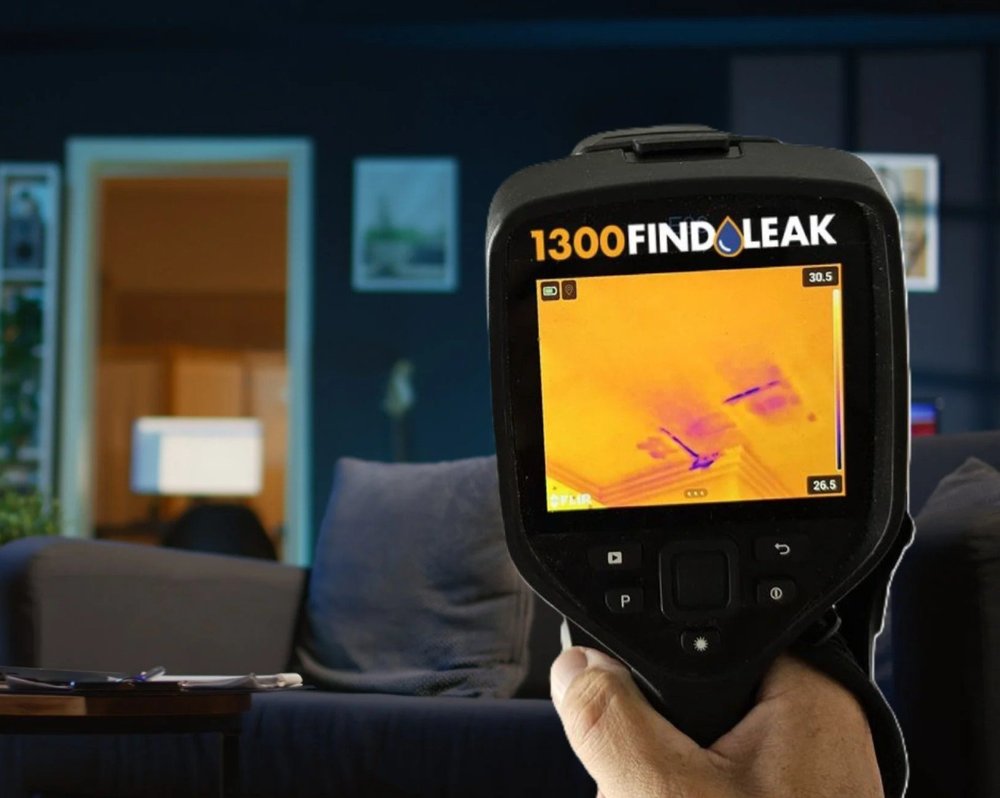
*If we can't find the leak, you don't pay for the inspection. Ask for details when you book or read our guarantee terms.
Water coming through right now?
- Turn off the water at the meter or stopcock if water is running somewhere it shouldn't.
- Switch off power to any area where water is near electrics.
- Take photos of the damage for your insurer.
- Call us on 1300 346 353. Our phone line is open 24/7.
What does a thermal imaging inspection show?
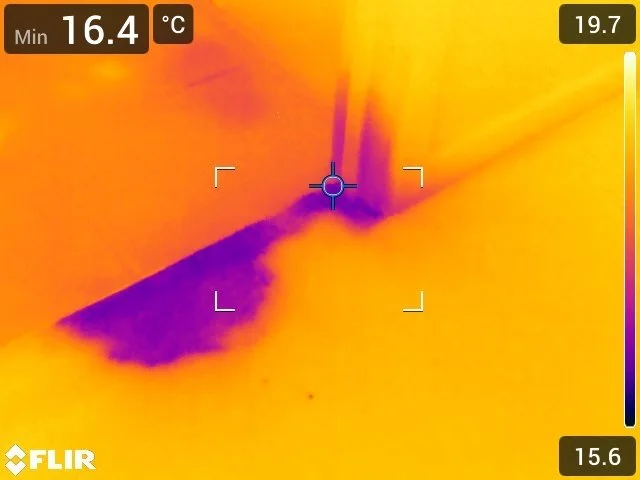
Wet building materials and leaking pipes are a different temperature from the dry areas around them. A thermal camera turns those differences into an image that shows the shape of a damp patch, the line of a hot water pipe in a slab, or water spreading from a shower, balcony, roof or window. With the naked eye you can often see water damage, but you can't tell how far the moisture has really spread. The camera can.
Why we never rely on the camera alone
A thermal image isn't proof of a leak: cold air, insulation gaps and sunlight can all look like moisture. We confirm every suspect area with moisture meters and the right test for the problem, such as acoustic listening, tracer gas, pressure testing, UV dye or flood testing, and those results go in your report alongside the thermal images.
What a thermal imaging inspection is used for
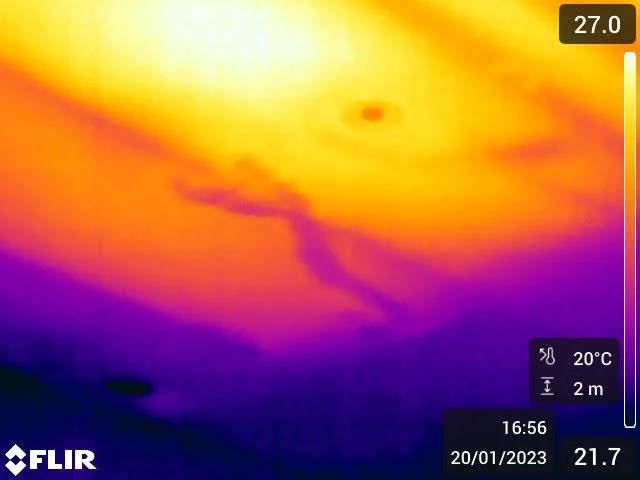
Hidden water and slab leaks
Water spreading under floors and hot water pipes leaking in slabs and walls.
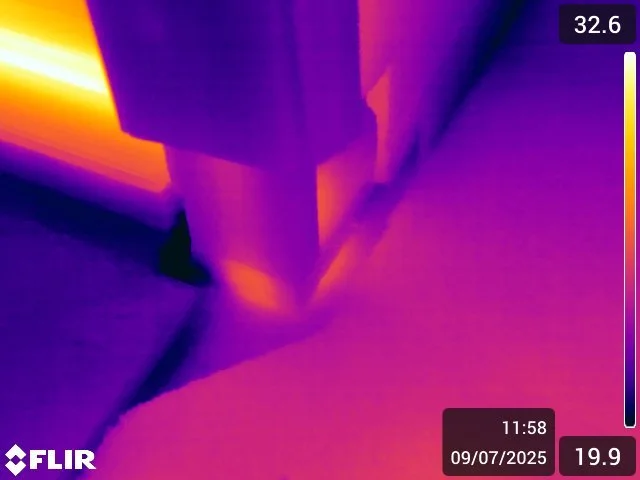
Shower, bathroom and balcony leaks
Water escaping from showers, wastes, balconies and window frames into the building.
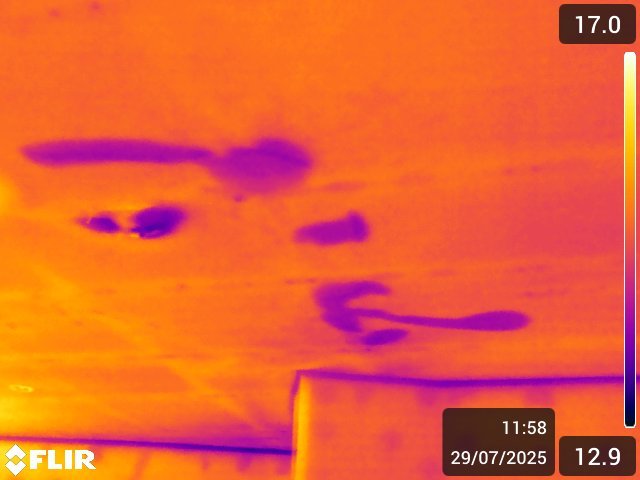
Roof leaks, damp and mould
Damp ceilings and walls after rain, and the moisture behind mould problems.
Watch: what a thermal camera shows that you can’t
A high-end commercial thermal camera shows how far water has really spread inside a wall, which you can’t judge by eye. Here we trace moisture through a masonry block wall to the edge of a balcony and the window above, where the water is coming in.

How much does a thermal imaging inspection cost in Australia?
First hour on site
inc. GST. Covers the inspection, testing and your written report. No separate call-out fee.
Extra time
inc. GST, only if needed. We always check with you before going past the first hour.
What's included
- Non-invasive testing
- Leak marked on site
- Photo report for insurers
- Found or you don't pay*
The first hour is $398 inc. GST in Melbourne, Sydney, Brisbane and the Gold Coast. Extra time is $198 an hour in Victoria and $168 an hour in NSW and Queensland. The Mornington Peninsula is $498, Geelong $598, the Surf Coast $898, and regional Victoria from $798. See the thermal imaging price page or the full price list.
How it works
Call or book online. Tell us what you're seeing. You get the price before we book and a 2-hour arrival window.
We test, not guess. The technician uses the right method for your leak and doesn't dig, drill or lift tiles to find it.
We mark the leak. We show you where it is and explain the cause before we leave.
You get the report. Photos, test results, cause and repair scope for your plumber, builder, strata manager or insurer.
Signs a thermal imaging inspection can help with
| Sign | Likely cause | How we find it |
|---|---|---|
| Damp, stained or bubbling wall or ceiling | Pipe, shower, roof or balcony leak | Thermal imaging, then moisture mapping and testing |
| Warm spot on the floor, or hot water running constantly | Hot water pipe leak under the slab | Thermal imaging, then acoustic listening |
| Swollen skirting boards near a bathroom | Shower or bath leak | Thermal imaging, moisture readings, dye test |
| Mould or a musty smell in one room | Hidden moisture in a wall or ceiling | Thermal imaging and moisture mapping |
| Water inside after rain | Roof, window or wall flashing leak | Thermal imaging with controlled water testing |
| Buying a home and want to check for leaks | Hidden moisture from past or current leaks | Thermal scan as part of a pre-purchase plumbing inspection |
Your thermal imaging report
What's in the report
Thermal images of the affected areas with the matching photos, moisture readings and test results, the likely source and cause, and a recommended repair scope. Please allow up to 14 days for formal reports.
Insurance and water bills
Insurers and loss adjusters ask for the cause and location of a leak, which is what the report shows. If a hidden leak pushed up your water bill, the report also helps when you apply for a leak allowance. Read our guide to claiming a water bill leak credit.
Repairs: our visit is about finding the leak. We mark it, explain the cause and give you the report. If you'd like us to fix it, we'll quote the repair and return at another time to complete it, often with trusted independent trades. Many plumbers, builders and property managers do their own repairs from our report.
Who we work for in Australia
- Homeowners, buyers and tenants
- Property managers and real estate agents, with pre-approved 30-day accounts
- Owners corporations and strata managers
- Builders
- Insurers and loss adjusters
- Plumbers and trades
Related leak detection services
- All leak detection services
- Water leak detection
- Shower leak detection
- Roof leak detection
- Balcony leak detection
- Water damage and mould
- Moisture detection
- Acoustic leak detection
- Tracer gas leak detection
- Thermal imaging Gold Coast
- Leak detection Melbourne
- Leak detection Sydney
- Leak detection Brisbane
- Leak detection Gold Coast
Thermal imaging inspection FAQs
How much does a thermal imaging inspection cost?
It's $398 including GST for the first hour on site in Melbourne, Sydney, Brisbane and the Gold Coast, with the written report included. Extra time is $198 an hour in Victoria and $168 an hour in NSW and Queensland, and we always check with you before going past the first hour.
Can a thermal camera see through walls?
No. It reads surface temperature. Moisture and leaking pipes change the surface temperature, which is why the camera shows where water is behind a wall, ceiling or floor.
Is a thermal image enough to prove a leak?
No. Cold air, insulation gaps and sunlight can look like moisture. We confirm what the camera shows with moisture readings and testing, and those results go in your report.
Can thermal imaging find a hot water leak under the slab?
Yes. Hot water leaking under a slab shows up as a warm area on the floor. We use thermal imaging to trace it, then confirm the exact spot with acoustic listening.
What happens if you can't find the leak?
We offer Found or you don't pay: if we can't find the leak you booked us for, you don't pay for the inspection. Conditions apply; see our guarantee terms.
Do you repair the leak as well?
Yes, if you'd like us to. Our visit is about finding the leak. If you want us to fix it, we'll quote the repair and return at another time to complete it, often with trusted independent trades.
Damp patch you can't explain? Call 1300 346 353.
Fixed prices from $398 inc. GST · Found or you don't pay* · 24/7 emergency line
Trusted by builders, real estate agencies and strata managers across Melbourne, Sydney, Brisbane and the Gold Coast













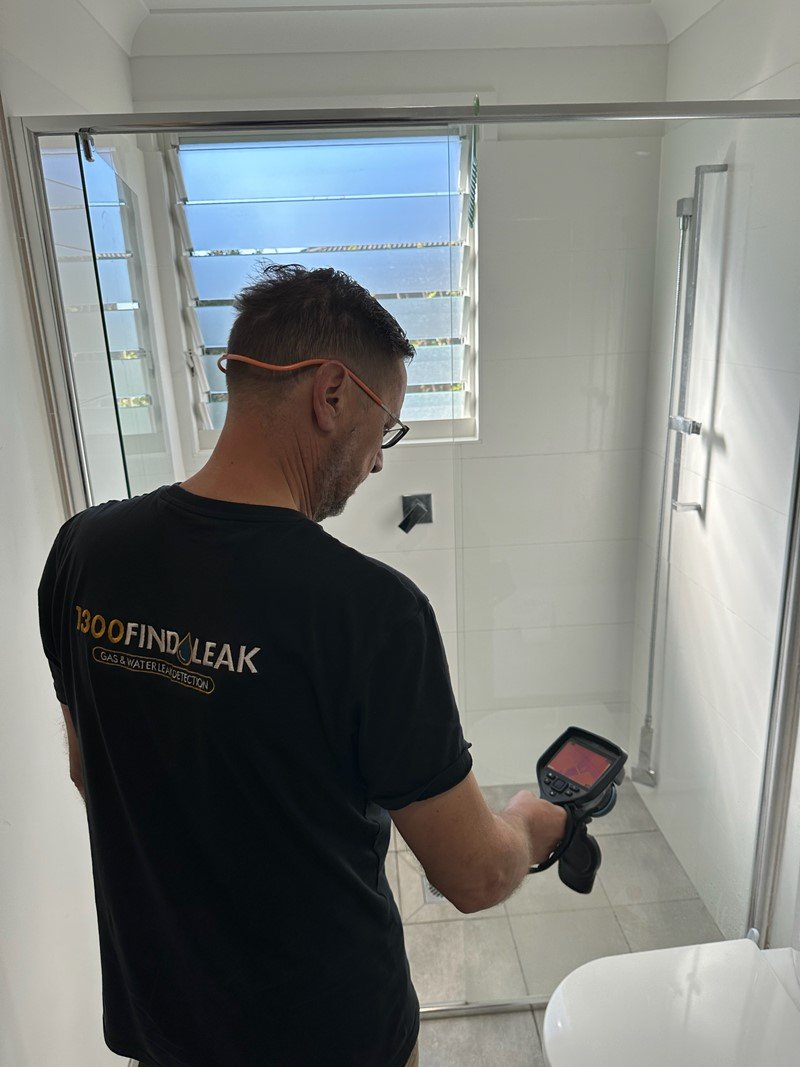
Benefits of using infrared cameras for leak detection:
-
Early Detection:
By identifying moisture or water damage before it becomes visible, you can address the issue before it causes significant damage. This can save you time and money in the long run.
-

Non-invasive:
Thermal imaging cameras can detect leaks without damaging your property. This means you don't have to worry about the cost and hassle of repairing walls or floors.
-

Accurate:
Thermal imaging cameras provide accurate and reliable results. This means you can have peace of mind knowing that any issues have been identified and addressed.
-
Quick:
Traditional methods of leak detection can take days or even weeks. Using a thermal imaging camera can detect leaks in a matter of hours, allowing you to address the issue as soon as possible.
-

Prevent mould growth:
Mould can grow quickly in moist environments. By detecting leaks early, you can prevent mould growth and protect the health of your family or employees.
Australian Home & Business Owners Choose Us

I'm Oliver Schulze, the director of 1300 FINDLEAK, a family-run company committed to solving all your gas and water leak problems. We pride ourselves on delivering the highest standards in customer outcomes and satisfaction, ensuring reliable and professional service every time.
We’re here to help!
Not sure which service you need?
Use the enquiry button below and we will be in touch shortly or call us on 1300 346 353, and our friendly team will gladly help schedule an appointment at your convenience. We're here to make the process easy and stress-free for you!
Call 1300 346 353 - 24/7 for emergencies, office hours 7am–11pm, 7 days
Email admin@1300findleak.com.au — work orders and purchase orders welcome
Book online or submit a work order through our portal
We're a mobile service and come to your property. Our teams are based in Parkdale and Moorooduc in Victoria, Seaforth in Sydney, and Hope Island on the Gold Coast, covering Melbourne, Geelong, the Mornington Peninsula, regional Victoria, Sydney, Wollongong, Brisbane, the Gold Coast, Tweed Heads, Casuarina, Kingscliff and Byron Bay.
1300 FINDLEAK Pty Ltd · ABN 83 640 078 397 · VIC licence 105159 · QLD licence PD26669
🔍 Find your local service area Online Enquiry